News
April 25, 2024
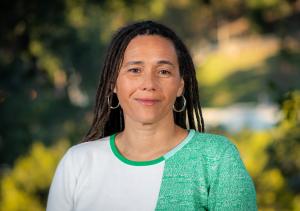
Jessica Granderson, a senior scientist at Lawrence Berkeley National Laboratory (Berkeley Lab), has been named director of the Building Technology and Urban Systems (BTUS) Division in the Energy Technologies Area. Her appointment is effective immediately and follows an extensive international search.“Jessica’s formidable experience of over 17 years at Berkeley Lab, her management skills,...
Read more
January 23, 2024
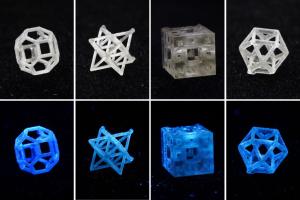
A research team led by Lawrence Berkeley National Laboratory (Berkeley Lab) has developed “supramolecular ink,” a new technology for use in OLED (organic light-emitting diode) displays or other electronic devices. Made of inexpensive, Earth-abundant elements instead of costly scarce metals, supramolecular ink could enable more affordable and environmentally sustainable flat-panel screens and...
Read more
January 22, 2024
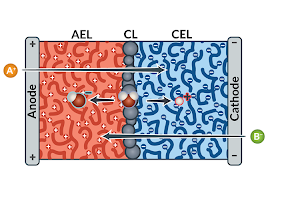
For decades, the food industry has used bipolar membranes for goals ranging from isolating proteins to preserving the color of apple juice. Now these specialized materials are at the scientific forefront of advanced energy conversion and storage and carbon capture, among other uses. A newly published review led by researchers at Lawrence Berkeley National Laboratory (Berkeley Lab) explores bipolar...
Read more
December 13, 2023
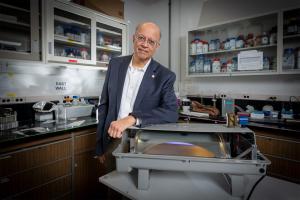
Ashok Gadgil – a retired faculty senior scientist in the Energy Technologies Area of Lawrence Berkeley National Laboratory (Berkeley Lab) – is among 162 new fellows of the National Academy of Inventors (NAI) for 2023. His many inventions include low-cost, life-sustaining solutions such as safe drinking water and fuel-efficient cookstoves for the most vulnerable communities in the developing...
Read more

November 13, 2023
Several employees in the Energy Technologies Area were honored in this year’s Director’s Awards at the U.S. Department of Energy's Lawrence Berkeley National Lab (Berkeley Lab). The Lab’s Director’s Awards program recognizes employees’ accomplishments, leadership, collaboration, multi-disciplinary science, cross-divisional projects, and commitment to excellence in support of the Lab’s...
Read more

November 7, 2023
Physicist Senior Scientist Vassilia Zorba, leader of the Laser Technologies Group in the Energy Storage and DIstributed Resources Division at Lawrence Berkeley National Laboratory (Berkeley Lab), has been recognized by multiple field-leading groups as a key figure in optics and photonics today. The professional society Optica (formerly OSA) – one of the largest in the field with 24,000 members,...
Read more
October 24, 2023
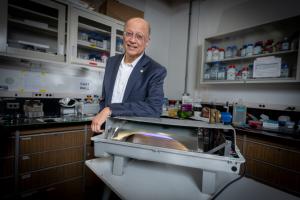
During a ceremony at the White House today, President Biden awarded Lawrence Berkeley National Laboratory (Berkeley Lab) retired Faculty Senior Scientist Ashok Gadgil the National Medal of Technology and Innovation, the nation’s highest honor for technological achievement. His award is “for providing life-sustaining resources to communities around the world. His innovative, inexpensive...
Read more
October 24, 2023
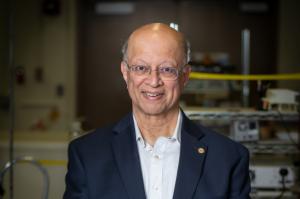
Growing up in Mumbai, India in the 1950s, Ashok Gadgil remembers his small apartment overflowing with books. “My dad was a member of a number of libraries and he would bring in a dozen books at a time,” he fondly recalls. These early experiences contributed to his growing curiosity and awareness of the world, and subsequently, his interest in science. Gadgil earned degrees in physics from the...
Read more
October 9, 2023
Hydrogen, the smallest element in the universe, has huge potential as a clean energy source. Using hydrogen (H2) as a fuel and as a means of storing energy could reduce our dependence on petroleum and help us reduce air pollution and greenhouse emissions to meet our goals for a cleaner and better climate. However, adopting hydrogen power on a large scale requires advances in technology and the...
Read more

October 3, 2023
Researchers at Lawrence Berkeley National Laboratory (Berkeley Lab) will receive more than $9.7 million in federal funding to enhance the cybersecurity of our nation’s clean energy infrastructure. The award comes from the U.S. Department of Energy’s (DOE) Office of Cybersecurity, Energy Security, and Emergency Response (CESER) as part of a $39 million package distributed across nine innovative...
Read more
September 29, 2023
The Department of Energy’s Lawrence Berkeley National Laboratory (Berkeley Lab) will host two new centers dedicated to advancing clean energy technology and combating climate change. The awards are part of DOE’s Energy Earthshots Initiative that launched in 2021 with the goal of speeding up technological breakthroughs and lowering costs. DOE has so far launched seven Earthshots spanning clean...
Read more
September 11, 2023
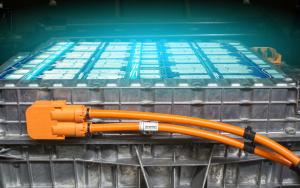
A consortium of the nation’s best battery scientists, led by Lawrence Berkeley National Laboratory (Berkeley Lab), will accelerate the commercialization of a new family of battery cathode materials called DRX or “disordered rock salt.” DRX cathodes could provide batteries with higher energy density than conventional lithium-ion battery cathodes made of nickel and cobalt, two metals that are...
Read more

September 6, 2023
Innovative water treatment and desalination technologies hold promise for building climate resilience, realizing a circular water economy, and bolstering water security. However, more research and development is critical not only to radically lower the cost and energy of such technologies, but to effectively treat unconventional water sources. Conventional water supplies, such as fresh water and...
Read more

August 24, 2023
Two innovative technologies from the Energy Technologies Area (ETA) are among four at the U.S. Department of Energy’s Lawrence Berkeley National Laboratory (Berkeley Lab) that have been honored with a 2023 R&D 100 Award. The award, presented by R&D Magazine and selected by an independent panel of judges, recognizes the year’s 100 most innovative and disruptive technology products from...
Read more

August 4, 2023
Mary Ann Piette, whose research has been foundational to improving energy efficiency of existing buildings and integrating flexible building technologies with the electric grid, has been appointed Associate Laboratory Director (ALD) of the Energy Technologies Area (ETA). The appointment, which took effect August 2, follows a national search. Piette has served as the interim ALD of ETA since...
Read more

July 18, 2023
Researchers are hard at work on ways to make buildings more energy-efficient and user-friendly as part of net zero carbon emissions energy systems. That means things like windows and walls that take advantage of nature to heat and cool, better batteries to store and deliver energy when needed, and systems that can adapt to changes from the electrical grid. What would it look like to combine all of...
Read more
May 30, 2023
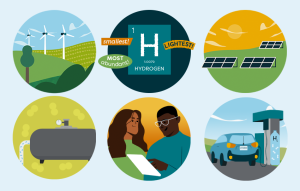
Solid oxide electrolysis cells that operate at high temperature provide high performance and efficiency, and can make use of waste heat or steam from industrial or geothermal sources. Lawrence Berkeley National Laboratory (Berkeley Lab) researchers are working to reduce the cost and increase the durability of electrolyzers and advanced pathways. The Science in Motion series from the Berkeley Lab...
Read more

May 10, 2023
After the Justice40 (J40) Initiative was established in 2021 by President Biden with the objective that 40% of benefits from certain federal investments go to disadvantaged communities, five scientists at the U.S. Department of Energy’s (DOE’s) Lawrence Berkeley National Laboratory (Berkeley Lab) played a key role in mapping out how to achieve this goal in federal programs that focus on...
Read more
May 9, 2023
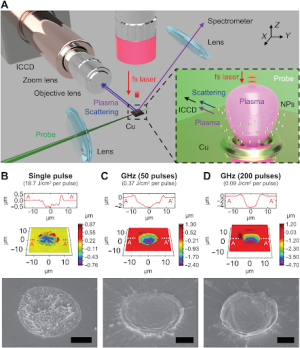
A team of scientists from the Department of Energy’s Lawrence Berkeley National Laboratory (Berkeley Lab) have now made significant headway in describing the complex dynamics in the ablation of copper. Their novel imaging setups, described in Science Advances, allowed the real-time visualization of plasma plumes, copper particles, and ejecta streaks created by the laser on the metal’s surface...
Read more
April 6, 2023
Levels of planet-warming carbon dioxide in the air continue to rise. Cutting emissions by moving away from fossil fuels is a priority – but so is removing carbon that’s already been emitted. Of the many emerging technologies on the table, which ones will be most effective, and where? What about costs? What kinds of investments will have the most impact? Scientists at the Department of...
Read more

March 30, 2023
Limiting global warming to 1.5 degrees Celsius above pre-industrial levels will require severely cutting greenhouse gas emissions by nearly 50% by 2030. Doing so calls for the immediate, large-scale adoption of energy efficiency, renewable energy, electrified transportation, high-performance batteries, low-carbon grids, and carbon capture and storage technologies across all sectors globally. This...
Read more

March 7, 2023
Scientists at Lawrence Berkeley National Laboratory (Berkeley Lab) have developed a conductive polymer coating – called HOS-PFM – that could enable longer lasting, more powerful lithium-ion batteries for electric vehicles. “The advance opens up a new approach to developing EV batteries that are more affordable and easy to manufacture,” said Gao Liu, a senior scientist in Berkeley Lab’s...
Read more
February 10, 2023
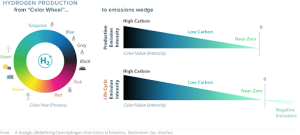
Use the phrase “green hydrogen” in a room full of energy researchers, and you might spark confusion. To a scientist who uses the unofficial color spectrum that classifies hydrogen by its production method, “green hydrogen” is a very specific term – hydrogen produced via electrolysis using renewable electricity. To a scientist who does not use the color system, green hydrogen might sound...
Read more
February 1, 2023
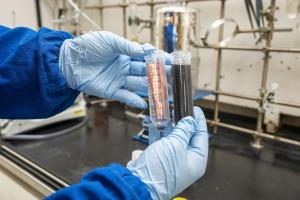
Lithium-ion batteries have revolutionized electronics and enabled an accelerating shift toward clean energy. These batteries have become an integral part of 21st century life, but we’re at risk of running out before 2050. The main elements used in each battery – lithium, nickel, and cobalt metals as well as graphite – are increasingly scarce and expensive, and there is little environmental...
Read more

January 31, 2023
The American Association for the Advancement of Science (AAAS) has announced their 2022 Fellows, including six scientists from the Department of Energy’s Lawrence Berkeley National Laboratory (Berkeley Lab). This lifetime honor, which follows a nomination and review process, recognizes scientists, engineers, and innovators for their distinguished achievements toward the advancement or...
Read more